
Men's Health: Analysis of the Causes of Low Libido and Guidelines for the Prevention and Treatment of Physiological and Pathological Nocturnal Ejaculation
Low libido in men
Low libido in men is mainly manifested as a lack of sexual desire, with libido lower than normal. However, due to significant individual differences in libido, and variations depending on mental state, health status, living environment, and age, it is difficult to diagnose low libido solely based on the frequency and intensity of sexual activity. Generally, aside from age-related decline in libido, a decrease in libido that is incompatible with age and disharmony in normal young and middle-aged men is considered low libido. Low libido is a sexual dysfunction, often manifested as a lack of sexual desire regardless of the interval between sexual intercourse and sexual activity, and a lack of interest in sex. Sexual arousal is only achieved when the wife initiates sexual activity and provides a certain amount of sexual stimulation.
The causes of low libido are complex. All serious systemic diseases, chronic illnesses, and excessive fatigue can reduce sexual arousal, leading to low libido. For these patients, decreased libido is merely an early symptom of certain diseases; most will experience other sexual dysfunctions as well. Many endocrine disorders, such as Cushing's syndrome, hypopituitarism, and hypothyroidism, can cause low libido in men.
Genetic diseases such as Klinefelter syndrome; liver diseases such as chronic active hepatitis and cirrhosis; nutritional and metabolic diseases such as hypoglycemia, hypokalemia, diabetes, and malnutrition; and other diseases such as chronic renal failure, congestive heart failure, brain tumors, cerebrovascular diseases, chronic obstructive pulmonary disease, collagen diseases, parasitic infections, prostatitis, and malignant tumors can all cause low libido in men. Besides the above-mentioned organic diseases, lack of sexual knowledge and poor mental state are also important causes of low libido in men.
Many medications can also cause low libido in men. Drugs such as ethanol, alpha-methyldopa, antihistamines, barbiturates, monoamine oxidase inhibitors, phenothiazines, propranolol, clonidine, coronary heart disease medications, phenytoin sodium, cannabis, and oral anti-androgens and estrogens can all reduce libido and lead to male hypoactive sexual desire disorder (HSD). Therefore, strict dosage control is necessary when using these drugs to prevent side effects.
Treatment Methods Treating male hypoactive sexual desire disorder is similar to treating other physical illnesses; finding and eliminating the underlying cause is crucial for effective treatment. For male hypoactive sexual desire disorder caused by organic diseases, appropriate treatment should be administered to address the underlying condition and eliminate influencing factors.
For the vast majority of men with HSD, which is functional, a psychotherapeutic approach focusing on sexual counseling and guidance is recommended. The principle of psychotherapeutic treatment is to mobilize the patient's subjective initiative. It is key that men with HSD must have a desire for treatment. Therefore, they should be shown care and sympathy through language and attitude to build their confidence, clarify the necessity of treatment, and thus cooperate well. The focus of treatment is to improve the couple's sexual relationship and harmonize their sex life, rather than pointing out whether one partner is "sick" or "not sick," to ensure a reliable emotional foundation for psychotherapy. Therefore, during treatment, prejudice or incorrect views should be overcome as much as possible to eliminate the patient's mental tension and concerns. Under the guidance of a doctor, couples can exchange ideas on sexual techniques, and attention should be paid to eliminating environmental factors that affect libido. A psychotherapy plan should be developed based on the specific circumstances of the couple, adhering to the principle of gradual progression. Attention should be paid to addressing cognitive barriers that are detrimental to the couple's sex life. Some people with low libido mistakenly believe that a lack of interest in sex means they cannot participate in sexual activity, confusing the relationship between sexual acceptance and sexual arousal. Clinical practice has shown that those who lack interest in sexual activity can experience positive changes in libido through normal sexual experiences. Systemic treatment with appropriate medication, under the guidance of a doctor, including androgen-based drugs such as methyltestosterone and testosterone propionate, can be effective.
Nocturnal Ejaculation
Nocturnal emission refers to ejaculation that occurs without sexual intercourse. The testes in men are the organs that produce sperm. With age and the maturation of the reproductive organs, the testes produce sperm constantly, and the seminal vesicles and prostate gland also continuously secrete seminal fluid. Semen accumulates in the body, and when it reaches a saturated state, it is discharged through nocturnal emission, as the saying goes, "when semen is full, it overflows." Generally speaking, unmarried mature men experience nocturnal emission 1-2 times per month, sometimes slightly more, which is a normal physiological phenomenon. If the frequency is too high, it should be considered a pathological phenomenon of nocturnal emission.
Physiological nocturnal emission refers to ejaculation without sexual intercourse in unmarried men or men separated from their spouses. Generally, nocturnal emission occurs once every two weeks or longer without causing any physical discomfort. Penile erectile function is normal. Nocturnal emission can occur without dreams or with dreams. Pathological nocturnal emission is more complex and can be caused by many factors. Traditional Chinese medicine believes that its pathogenesis is due to kidney qi deficiency and insufficient kidney essence, leading to kidney deficiency and inability to store essence. The causes can be caused by excessive mental exertion and unfulfilled desires, resulting in excessive fire. Improper diet, rich and heavy alcohol, accumulation of dampness and heat, and downward flow of damp heat are also important causes. The difference between physiological and pathological nocturnal emission lies in: (1) Age difference: Physiological nocturnal emission is more common in young adults, unmarried or separated from their spouses; pathological nocturnal emission is more common in middle-aged and elderly people or those with congenital deficiencies. (2) Different physical conditions: Physiological nocturnal emission occurs in healthy individuals with abundant energy, or healthy individuals who are easily agitated or stressed. Pathological nocturnal emission is often seen in individuals with a pale complexion, fatigue, heavy smoking, excessive drinking, overeating fatty and sweet foods, and a bloated or weak physique. These individuals often have a history of masturbation, excessive sexual activity, or unfulfilled sexual desires.
(3) Different states during nocturnal emission: Physiological nocturnal emission generally occurs once every two weeks or longer, with a large volume of thick semen, and normal penile erectile function during the emission. Pathological nocturnal emission occurs frequently, sometimes occurring at night, or spontaneously expelled while awake. The volume of semen is small and thin, and penile erection is weak or absent during the emission. Symptoms after the emission include mental fatigue, lower back and knee pain, tinnitus, dizziness, and general weakness. Nocturnal emission can generally be divided into two categories: nocturnal emission during sleep (dreaming) is called wet dream, and nocturnal emission while awake or without dreams is called spermatorrhea. Wet dream and spermatorrhea are both types of nocturnal emission, and there is no essential difference between them. As ancient medical books say: "Wet dream and spermatorrhea are both diseases of spermatorrhea; although their symptoms differ, the underlying cause is the same." Males may experience nocturnal emission from 1-2 years after puberty to old age. Women may also experience increased vaginal secretions and mucus discharge during sleep or after sexual stimulation, but this is generally not noticed. However, this is different for men; many men view nocturnal emission as a medical symptom and become anxious.
The main causes of nocturnal emission are as follows:
One is psychological factors. Nocturnal emission can be caused by several factors, including:
Firstly, excessive and uncontrollable sexual desire, particularly pre-sleep stimuli that stimulate the central nervous system for sexual activity over a prolonged period (e.g., frequent masturbation, reading erotic books or viewing erotic images).
Secondly, physical weakness. Inadequate function of various organs, such as insufficient function of the cerebral cortex leading to loss of control over lower sexual centers, can increase the excitability of the erection and ejaculation centers, also resulting in nocturnal emission.
Thirdly, local lesions. Local lesions of the sexual organs or urinary system, such as phimosis, redundant foreskin, urethritis, or prostatitis, can stimulate the sexual organs and cause nocturnal emission.
Prevention and Treatment: Treatment of nocturnal emission should primarily target the underlying cause. To understand sexual physiology, establish a regular sex life and avoid excessive excitement of the sexual organs, such as excessive masturbation or viewing pornography; strengthen physical exercise to improve physical fitness and focus your energy on studies and work; when sleeping, adopt a side-lying position and avoid sleeping on your back (when sleeping on your back, place your hand on your lower abdomen and the blanket on your abdomen), and avoid wearing tight or narrow pants, as the environment of sleeping on your back and tight underwear can stimulate the reproductive organs, causing sexual arousal and nocturnal emission.
For nocturnal emission caused by diseases of the sexual organs and lower urinary tract, treatment should be given according to the cause: for example, phimosis or redundant foreskin requires surgical treatment; urethritis or prostatitis can be treated with antibiotics; for nocturnal emission caused by neurasthenia, severe cases can be treated with appropriate oral sedatives, such as tribromide mixture 5-10 mg, 3 times a day, or nitrazepam 5 mg, 3 times a day, or diazepam (Valium) 2.5-5 mg, 3 times a day.
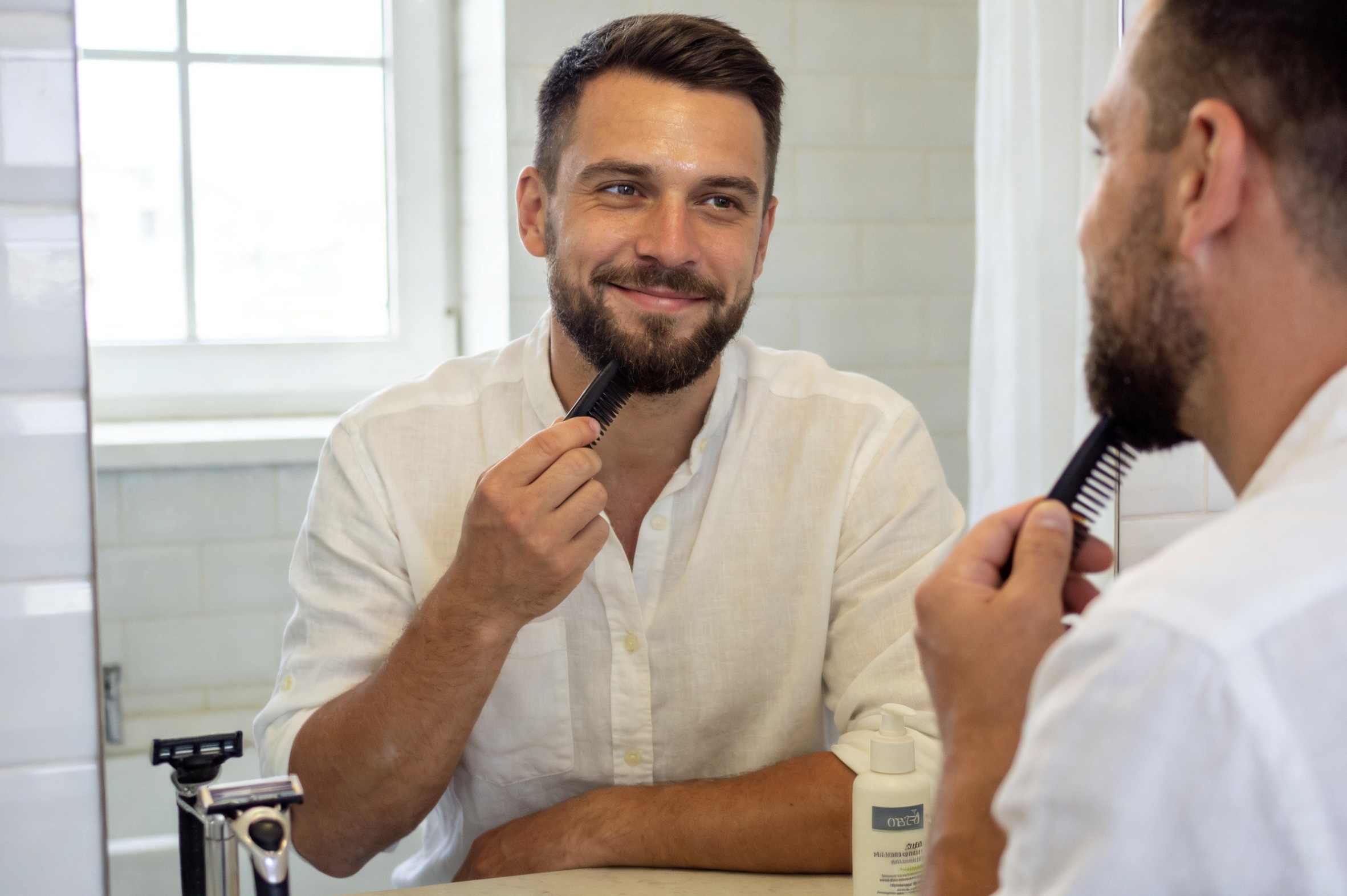
Health warnings and care tips for beard care
This article reveals the characteristic of beards absorbing harmful substances, emphasizes the importance of timely shaving, and warns that plucking beard hairs can lead to serious consequences such as infections. Mastering scientific beard care knowledge can help men avoid health risks. These practical health tips allow you to protect your health in the details.
2026-03-07
Self-test for male obesity index and common sense about weight management and health care
This article provides a body fat percentage self-assessment quiz to help men evaluate their body body fat percentage, and analyzes the reasons for post-marital weight gain and dietary and exercise strategies for weight control. Mastering scientific weight management and health knowledge can help men prevent obesity and stay away from chronic diseases. These practical health tips will help you maintain a healthy physique.
2026-03-08
Secrets and principles of scientific muscle gain and fat loss
This article introduces muscle-building and fat-loss secrets such as reducing nighttime carbohydrates, incorporating aerobic training, and increasing fiber intake. It emphasizes that scientific weight loss requires identifying the type of obesity and avoiding quick results. Mastering scientific weight loss principles is key to healthy weight loss. These methods will help you retain muscle while losing fat.
2026-03-09