
Men's Health: A Guide to Symptom Identification and Complication Prevention and Management of Mumps
Mumps
Mumps is an acute infectious disease caused by the mumps virus, commonly seen in children. Clinical manifestations are mainly characterized by fever, mild malaise, swelling and pain of the parotid glands. The mumps virus is transmitted through droplets. Clinical presentation includes a rapid onset of fever, mild malaise, and occasionally chills, headache, nausea, vomiting, and general pain. Within hours or 1-2 days of onset, one parotid gland swells, followed by swelling of the other parotid gland, in a symmetrical pattern. The swollen area is centered on the earlobe, with its anterior and upper border reaching the zygomatic arch, its posterior border extending to the sternocleidomastoid muscle, and its lower border extending to the jawbone. The swollen area is elastic and mildly tender, with a burning sensation on the surface; pain worsens when opening the mouth to eat. The parotid gland swelling gradually disappears after 4-5 days, with the entire course of the disease lasting 7-12 days. Complications such as acute pancreatitis, orchitis, oophoritis, myocarditis, and meningoencephalitis may occur during the course of the disease. For home emergency treatment, respiratory isolation should continue for 7 days after the parotid swelling subsides. The child should rest in bed, consume a liquid or semi-liquid diet, and avoid irritating foods such as cold, hot, or acidic foods. Local cold or hot compresses can relieve pain. Gargle with compound borax solution to maintain oral hygiene. For high fever, physical cooling or antipyretic drugs can be used. If orchitis occurs, the testicle can be supported with a T-shaped cloth bandage and cold compresses or ice packs can be applied to relieve pain. This disease should be treated according to respiratory infectious disease prevention protocols, isolating the patient until the parotid swelling completely subsides. Susceptible children who have been in contact with the patient can be given oral Banlangen granules, etc.
This disease corresponds to the categories of "malaria mumps" and "toad plague" in Traditional Chinese Medicine. The disease is caused by external invasion of wind-heat pathogens, internal accumulation of heat, and the mutual binding of wind and heat pathogens, obstructing the meridians, causing stagnation of qi and blood, and resulting in local stagnation. Common clinical syndrome types include:
① Heat-toxin attacking upwards type: Symptoms include mild fever and chills, mild swelling of one or both sides of the cheeks, local soreness, difficulty chewing, thin white or pale yellow tongue coating, and a floating and rapid pulse.
② Epidemic toxin raging type: Symptoms include significant swelling of the parotid glands, a hard, swollen feeling upon palpation, burning sensation, irritability, headache, thirst, difficulty chewing, red and swollen throat, constipation, red tongue with yellow coating, and a slippery and rapid pulse.
【Dietary therapy
(1) Take 200g of mung beans, 100g of soybeans, and 100g of brown sugar. Wash the first two ingredients and put them in a pot with an appropriate amount of water. First, bring to a boil over high heat, then simmer over low heat until it becomes a thin porridge. One dose per day, divided into several servings. Continue for several days to alleviate symptoms. Suitable for mumps of the heat-toxin accumulation type.
(2) Take 30g rock sugar and 1 duck egg. Crush the rock sugar, place it in a bowl, add an appropriate amount of hot water to dissolve the rock sugar, then add the duck egg, stir well, and steam in a pot until cooked. Take twice daily, for breakfast and dinner, for 7 consecutive days.
(3) Take 100g garlic, 100g ginger, and 500g vinegar. Wash the ginger, slice it, and soak it together with whole cloves of garlic in vinegar. Seal and store for at least 30 days. Consume the vinegar and chew the ginger and garlic once daily. Use with caution if you have excessive stomach acid. During the epidemic of influenza and other respiratory diseases, it can be consumed with dishes in moderation, or taken after meals. Take about 10g of the soaking liquid twice daily. Prescriptions and Prescriptions
(1) Take 150g of Isatis root, 100g of Prunella vulgaris, and 500g of white sugar. Place the Isatis root and Prunella vulgaris in a pot, add 1500g of water, and simmer over low heat until reduced to 500g. Remove the dregs, then add the white sugar and simmer until it becomes a paste. Cool and bottle for later use. Children aged 1-2 years take 10g each time, children aged 3-5 years take 15g each time, and children over 6 years old take 20g each time, taken with warm water. Take 2-3 times daily for 7-10 days.
(2) Take 9g of honeysuckle, 6g of forsythia, 6g of Isatis root, 12g of Scrophularia ningpoensis, 9g of dandelion, and 3g of indigo naturalis. Add an appropriate amount of water to the above 6 ingredients and decoct into a soup. Remove the dregs and drink. One dose daily, divided into 2-3 servings, taken for 3-5 days. Topical Therapy
(1) Take appropriate amounts of red beans and honey. Crush the red beans and mix with honey to form a paste. Apply externally to the affected area.
(2) Take appropriate amounts of mung beans and one egg. Grind the mung beans into powder, mix with egg white, and apply to the affected area three times a day for five days as one course of treatment.
(3) Take appropriate amounts of dandelion and several eggs. Crush the dandelion into a paste, mix with egg white to form a paste, and apply the paste to the affected area.
Drug Therapy
For high fever and headache, antipyretics can be taken orally, along with vitamin B₆, 20 mg each time, three times a day. Antiviral drugs include moroxydine hydrochloride, calculated at 10-20 mg per kilogram of body weight daily, divided into three oral doses. According to TCM diagnosis, the following prepared Chinese medicines can be selected:
(1) Mumps Tablets: Children aged 7 and above take 6 tablets each time, children aged 2-7 take 2-4 tablets each time, and children under one year old take 1-2 tablets each time, twice a day, taken with warm water on an empty stomach.
(2) Compound Daqingye Mixture (or Granules): 10-15 ml of the mixture each time, 2-3 times a day; or 1 sachet of the granules each time, 3 times a day, dissolved in boiling water.
(3) Lianqiao Baidu Pills: 6 grams each time, twice a day, taken with warm water.
(4) Anti-Mumps Syrup: 20-30 ml each time, twice a day orally.
(5) Anti-Mumps Injection: Intramuscular injection, 2 ml each time, 1-2 times a day. (6) Antiviral injection: Intramuscular injection, 2 ml each time, twice daily.
(7) Antiviral granules (or oral liquid): Adults take 1 sachet of granules each time, 2-3 times daily, dissolved in boiled water; oral liquid takes 10 ml each time, 2-3 times daily, with dosage reduced for children.
Ruyi Jinhuang Powder: For external use, mix with clear tea, vinegar, vegetable oil, or honey and apply to the affected area.
During fever, patients should rest in bed; their diet should consist of liquid or semi-liquid foods such as milk, human milk, soy milk, rice porridge, noodles, and soups. Spicy and irritating foods should be avoided, especially raw, cold, and acidic foods; pay attention to oral hygiene, brush teeth in the morning and evening; drink plenty of boiled water to replenish fluids; avoid drafts. This disease should be treated with both internal and external medications simultaneously for better efficacy. During an outbreak of this disease, preventative measures should be taken. A decoction of 10 grams each of honeysuckle and isatis root can be taken daily for three consecutive days; alternatively, isatis root granules can be taken twice daily, dissolved in boiling water, for three consecutive days. Furthermore, infected individuals should be isolated until one week after the parotid gland swelling subsides to prevent transmission to others.
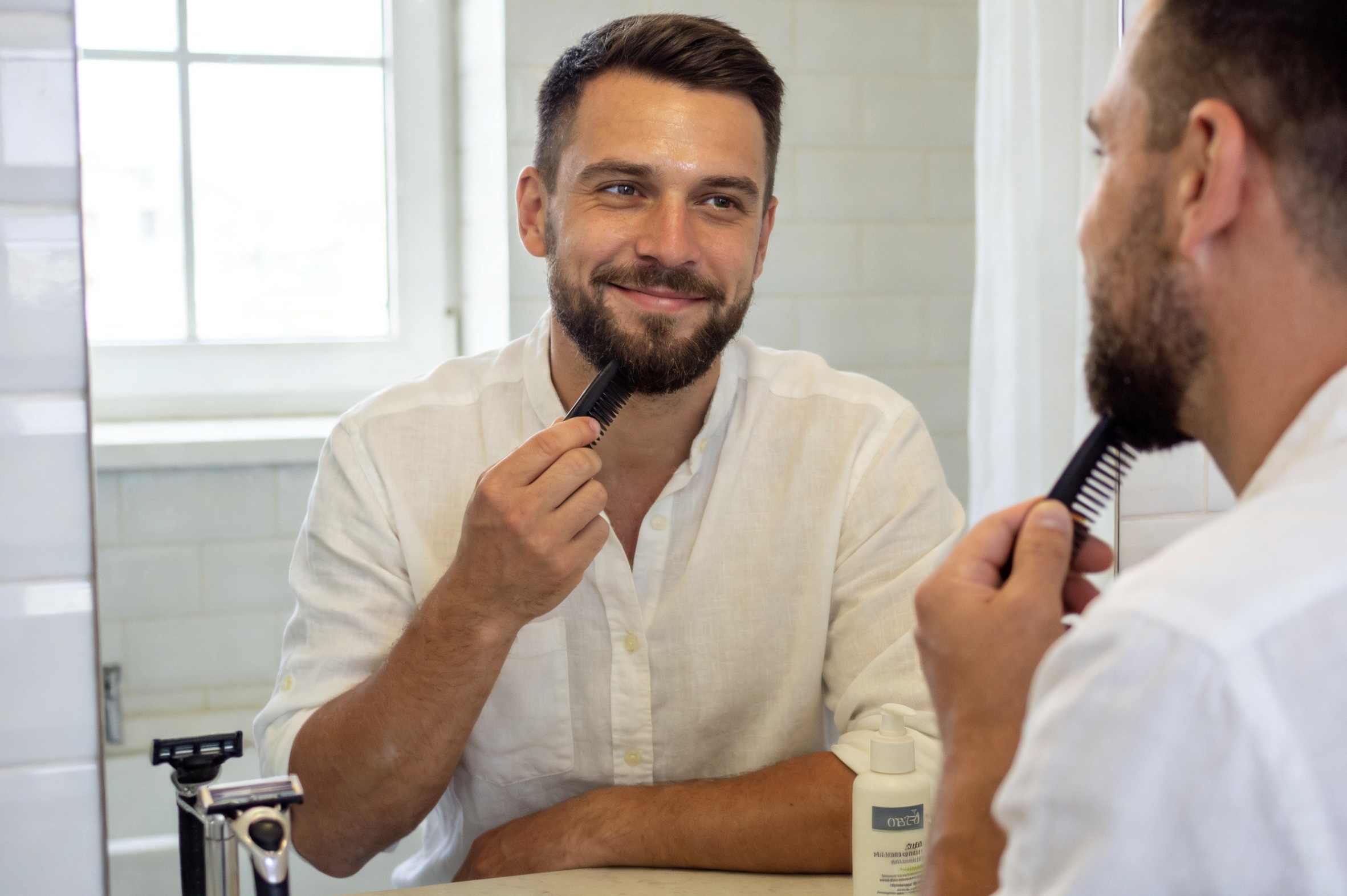
Health warnings and care tips for beard care
This article reveals the characteristic of beards absorbing harmful substances, emphasizes the importance of timely shaving, and warns that plucking beard hairs can lead to serious consequences such as infections. Mastering scientific beard care knowledge can help men avoid health risks. These practical health tips allow you to protect your health in the details.
2026-03-07
Self-test for male obesity index and common sense about weight management and health care
This article provides a body fat percentage self-assessment quiz to help men evaluate their body body fat percentage, and analyzes the reasons for post-marital weight gain and dietary and exercise strategies for weight control. Mastering scientific weight management and health knowledge can help men prevent obesity and stay away from chronic diseases. These practical health tips will help you maintain a healthy physique.
2026-03-08
Secrets and principles of scientific muscle gain and fat loss
This article introduces muscle-building and fat-loss secrets such as reducing nighttime carbohydrates, incorporating aerobic training, and increasing fiber intake. It emphasizes that scientific weight loss requires identifying the type of obesity and avoiding quick results. Mastering scientific weight loss principles is key to healthy weight loss. These methods will help you retain muscle while losing fat.
2026-03-09