
Health Guide for Elderly Men: Facing Sexual Aging and Physiological Changes
The increasing average lifespan of humans is leading to an aging population structure. According to the National Bureau of Statistics' bulletin on key data from the 1990 census, the elderly population aged 60 and above accounted for 8.59% of the total population in mainland China. Related data indicates that by 2000, the national elderly population would reach 130 million, accounting for 11% of the total population; by 2025, my country's elderly population will surge to 280 million, meaning one in five people will be elderly. According to the United Nations standard, a country is considered an aging society when 10% of its population is aged 60 or older. It is estimated that the global elderly population reached 1.18 billion in 2000 and will rise to 2.24 billion by 2025, accounting for 27% of the world's total population. Population aging signifies social progress and development, but it also brings a series of healthcare and socio-psychological problems. Sexual issues in old age involve both physiological and psychological changes, as well as social issues of opinion and acceptance. In contemporary life, the sexual lives of the elderly are increasingly attracting attention. With the continuous increase in the elderly population, research on sexual issues in the elderly becomes even more relevant and necessary.
We will all eventually enter old age. Due to modern scientific progress, the development of productivity, and continuous improvement in living conditions, the average lifespan of humans has generally increased, and the number of elderly people is gradually increasing. In the past, "it was rare for a person to live to seventy," but now "it's not uncommon to live to seventy." So, at what age is considered old age? Generally, four methods (standards) are used to define the age limit for entering old age:
1. By chronological age. Chronological age refers to the time an individual has lived since birth; the age we commonly refer to is this. Generally, 45-60 years old is considered the early old age, and 61-79 years old is the old age. The World Health Organization defines 60 years old as the threshold for entering old age.
2. By physiological age. Physiological age refers to the age determined by an individual's physiological development and the function of various organs. Generally, the period from 40 to 59 years old is considered the early stage of aging, and 60 years and above is considered the aging stage.
3. Classification by psychological age. Psychological age refers to the age determined by the level of an individual's psychological activity. Generally, 60 years and above is considered old age.
4. Classification by social age. Social age refers to the age determined based on an individual's degree of adaptation to society and the social roles they play in interpersonal interactions. Generally, 60 years and above is considered old age.
Western countries generally consider 65 years and above as old age. In my country, there is a saying "over sixty years old," meaning that 60 years and above is considered old age. In 1964, at the first academic conference on gerontology and geriatrics held in my country, it was stipulated that both men and women should be over 60 years old as old age. This regulation has remained in effect to this day, so my country uses 60 years old as the standard for old age. Generally, after 60, people experience physiological changes such as tooth loss, dry and loose skin, and decreased sexual function; psychologically, they also experience some decline, such as a decrease in thinking ability, comprehension, judgment, and especially recent memory. I have personally experienced all of these changes, and they are to be expected. Therefore, older people should face them correctly, neither becoming despondent nor recklessly overexerting themselves, but rather acting within their capabilities. Forcing oneself to do work beyond one's strength may lead to illness. Conversely, constantly worrying about being "too old to be of any use," being listless, and frequently lamenting "the sunset is infinitely beautiful, but alas, it's nearing dusk," will inevitably accelerate the aging process.
Physiological Changes in Sexual Aging
The causes of decreased sexual function are complex, influenced not only by sex hormones but also by psychological, social, and health factors, such as psychological damage to sexuality, cultural inhibition, and disuse atrophy of sexual function. Therefore, age alone cannot be considered.
Male Aging
The decline in male reproductive capacity differs fundamentally from that in women. Men do not have a fixed age for cessation of fertility; only after age 50, sperm production decreases with age, but even into their 90s, sperm production continues. Similarly, from age 60, the level of sex hormones in the bloodstream gradually declines, but not as dramatically as in women.
Men over 60 may experience a complex set of symptoms known as "male menopause." These include: fatigue, weight loss or loss of appetite; suppressed libido, often accompanied by loss of sexual ability; poor concentration, general weakness, easy fatigue, and irritability—non-specific symptoms.
In terms of sexual physiology, there are significant changes compared to younger men. Penile erection requires a longer time or more direct stimulation of the genitals. The rigidity of the erection also weakens, and the intensity of ejaculation is usually reduced. Some ejaculation is not complete ejaculation but rather a slow flow from the urethra, possibly related to a decrease in semen volume. Many men aged 60-80 can be aroused and achieve sexual satisfaction during each sexual encounter, but often do not ejaculate. The refractory period becomes more pronounced with age.
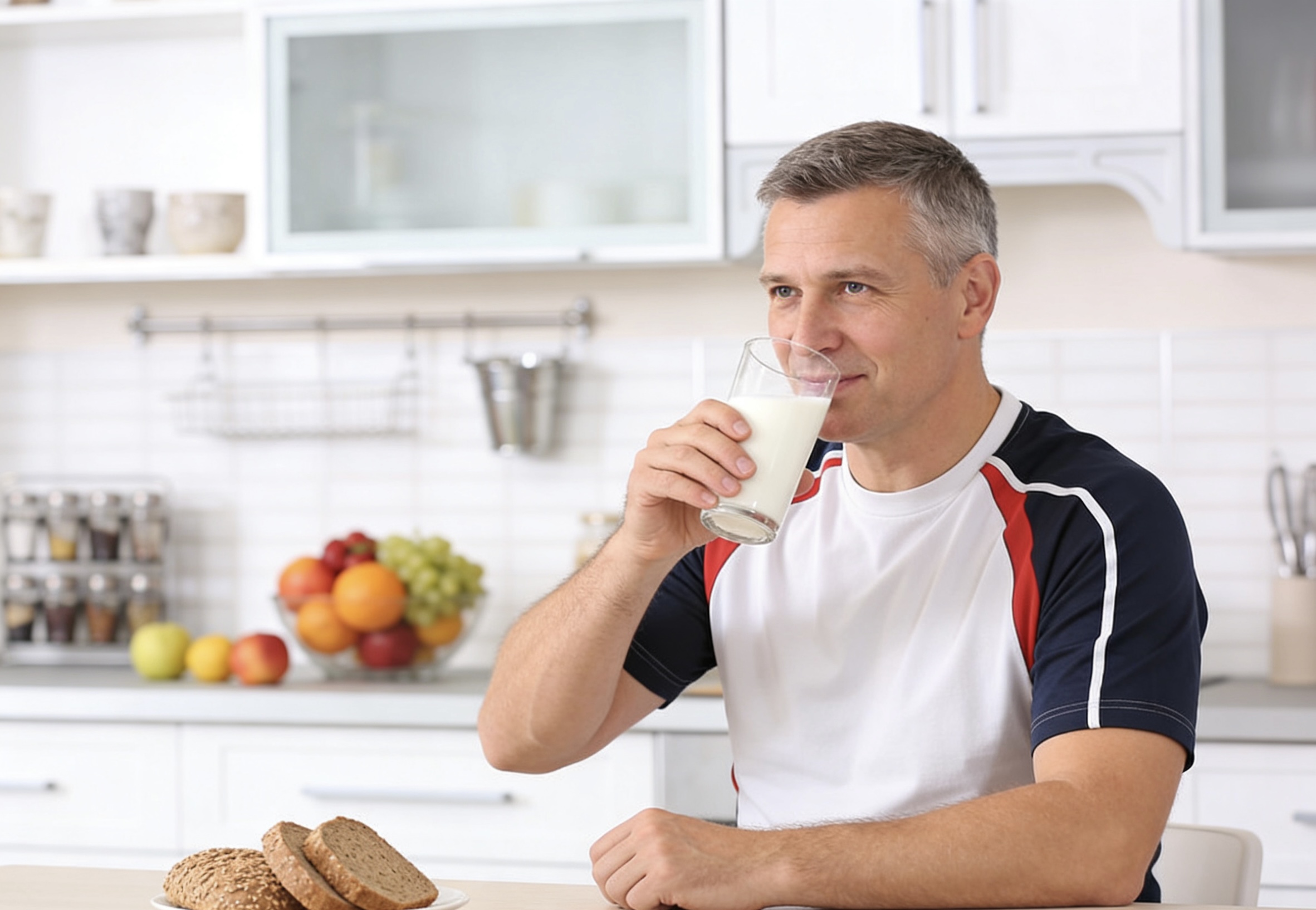
Who needs calcium supplements and what are some health tips for consuming vinegar in moderation?
This article details the needs of people with diabetes, osteoporosis, and other conditions requiring additional calcium supplementation, and introduces the health benefits of consuming vinegar in moderation, such as relieving fatigue, preventing aging, and lowering blood pressure. Mastering scientific health knowledge can help men make targeted nutritional supplements. Correct health knowledge makes daily wellness more effective.
2026-03-17
Health Guidelines on People Who Should Avoid Beer and Food Combinations That May Cause Disease
This article details why patients with gastritis, gout, and other conditions should limit their beer consumption and warns against seven potentially harmful food combinations, such as seafood with beer and processed meats with lactic acid drinks. Understanding scientific food safety knowledge helps mitigate health risks. Proper eating habits are fundamental to protecting your family's health.
2026-03-17
Scientifically select kidney-tonifying and detoxifying foods to protect men's health
This article introduces natural foods that aid kidney detoxification, such as cucumbers, bitter melons, and cherries, and foods that aid liver detoxification, such as carrots and grapes, emphasizing the importance of a scientific diet in maintaining the body's metabolism. Protecting men's health through the rational selection of detoxifying foods means that attention to men's health should begin with daily dietary adjustments.
2026-03-17